Openhand Press
A Season of Translation
This is not a ranked list of the best climbs of the year so far.
If it were, it would be a shorter post. A few grades, a few dates, a thank-you to the crew. Done.
Instead, this is a timeline of the moments worth talking about: the ones that each showed something different. Some of them showed confidence. Some showed transfer. Some showed range or improvement in styles I used to lean away from. One of them, the most important thread running through May, showed that the season was never going to be as tidy as I wanted it to be.
The first half of the year was not about building a cleaner tick list. It was about finding out whether the things I had been building on boards, on trips, and in training could survive contact with local rock.
Here is what I found out.
Contents
- December 28 – January 4: Red Rock as the Reset
- February 28: One of a Kind SDS
- April 25: Grizzly and Mama Bear
- May: The Month Got Less Neat
- June 8: Tsunami
- What the First Half Gave Me
December 28 – January 4: Red Rock as the Reset
The full story is in the Red Rock trip report. What matters here is the larger arc.
I arrived carrying a quiet concern that I had started to plateau. Between Bishop and the trip, nothing measurable had changed. No new grades. No obvious progress. The board sessions were productive but felt flat.
Sandstone helped with that immediately. Back home on Nova Scotia granite, a few hard sessions will end your skin budget for the week. On sandstone, I could fall, brush, pull back on, and repeat without rationing attempts. The rock allowed volume, and volume allowed learning.
The V10s mattered. The Red Wave went on my first day with no expectations behind it, and Americana Exotica two days later. Neither required a siege. What they showed me was not that I had suddenly gotten stronger. It was that whatever was holding me back was mostly in my head.
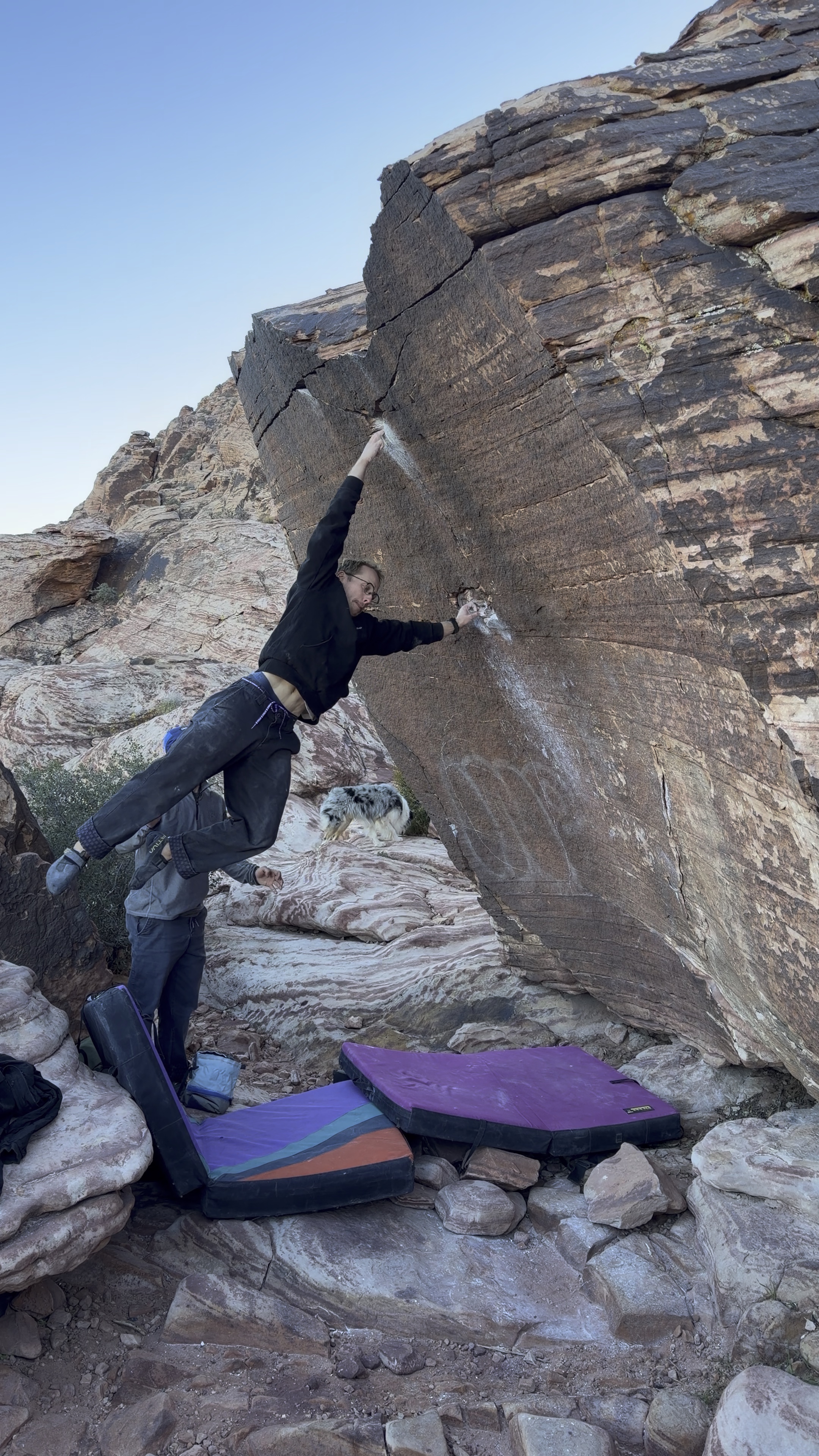
The plateau was mental.
I came home not with a dramatically different set of physical tools, but with a different belief about what I was capable of on real rock. The rest of the year was spent testing whether that belief could hold.
February 28: One of a Kind SDS
Lat/Lon: 44.57354, -63.54987
The first local send of the year happened at the Mole Boulder in Herring Cove, outside Halifax, on February 28.
One of a Kind SDS is a V7 and the king line up the scooped face of the Mole Boulder: short, technical, temperature-dependent crimps, and a powerful finish move. I had tried it twice before, once in 2023 and once in 2024, always in summer, always in conditions that made the holds feel next to impossible. I had done every move. I had never sent it from the ground.
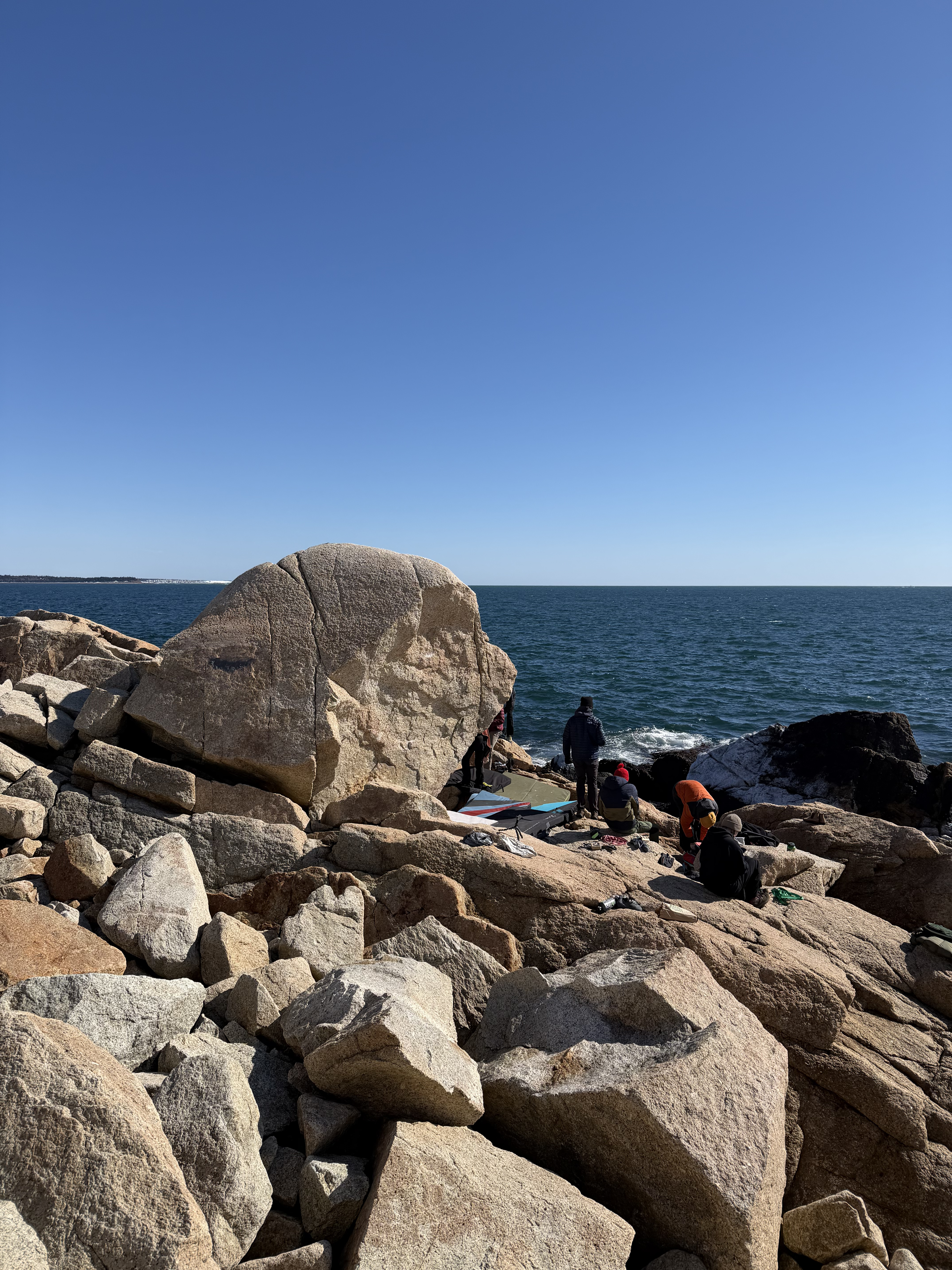
The difference in February was the cold. High of 2°C, low of -5°C, winter gloves between attempts, hand warmers jammed into my chalk bag. The kind of day that feels punishing until the holds start feeling real.
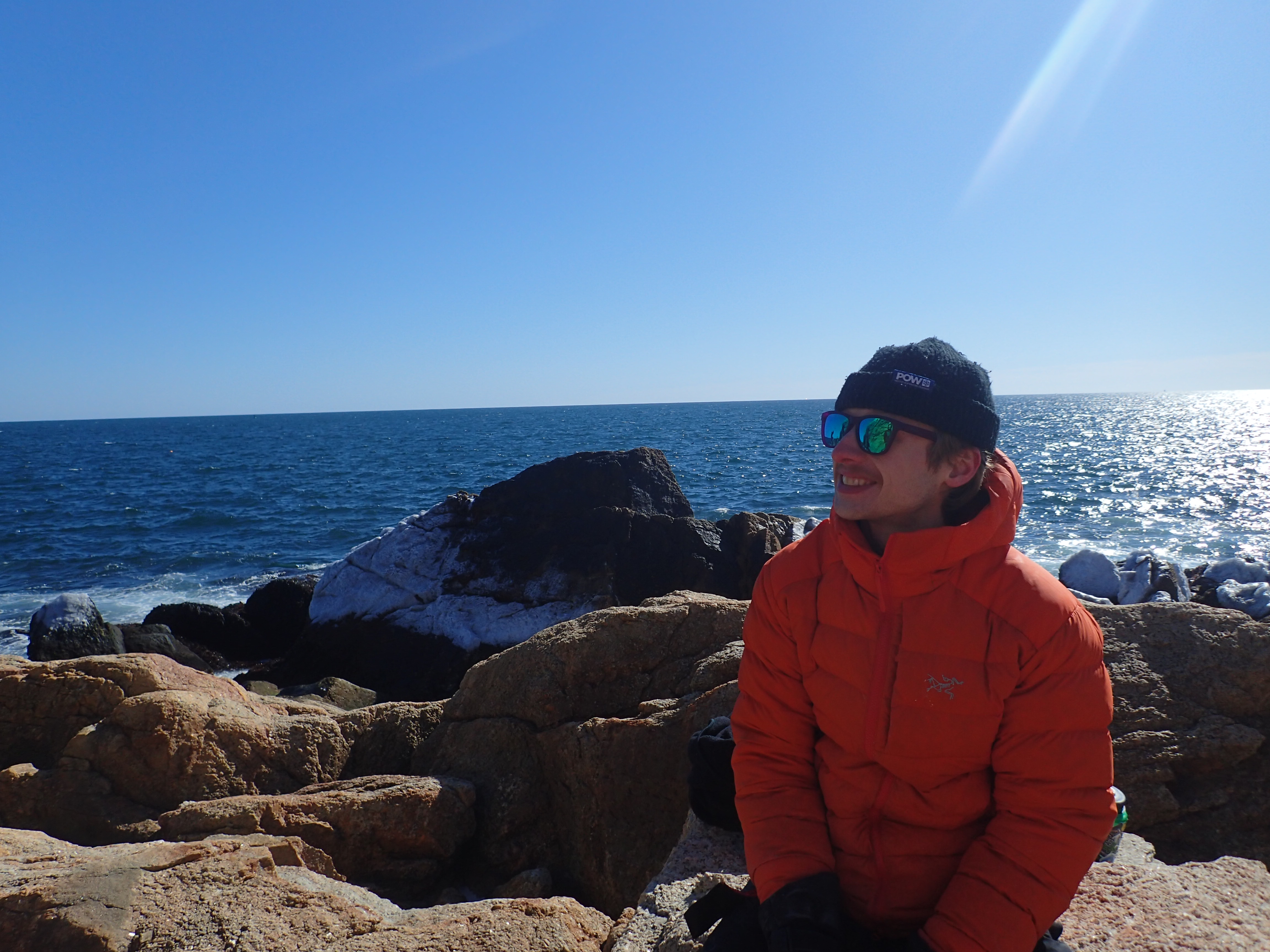
One of a Kind is not the hardest boulder I climbed this year. But it sticks in memory for the timing. It was the first outdoor send after Red Rock. It was the first proper coastal day of the season: stellar location, the right crew, the feeling of being back outside after weeks on boards. Herring Cove is primarily easy bouldering territory. I had never really sieged this one. I just kept coming back when I was in the area, trying it when conditions were wrong, and eventually showed up when they were right.
That pattern, returning without urgency and sending when the variables finally aligned, felt like a small lesson about how Nova Scotia climbing often works. Some boulders just need the right day.
April 25: Grizzly and Mama Bear
Lat/Lon: 44.47880, -63.63344
The full six-session process is documented in the Grizzly Sessions post. What matters here is what Grizzly meant inside the arc of the year.
Red Rock suggested I was not as close to my ceiling as I thought. Grizzly was the proof.
Grizzly is a V11 and the hardest local line I had committed to seriously: a wide compression test piece at Owl’s House in West Pennant, first ascended by Nick Sagar in 2006. Wide compression is not my natural style. The first session made that obvious. The opening sequence felt somewhere between difficult and impossible, and the heel-hook crux that followed was a problem I could not solve in the cold. It took six sessions, split fingers, glassy conditions, and a send day that followed six straight days of board climbing with no rest.
On the third burn of Session 6, the compression felt easy. The shark tooth move stuck. I improvised the finish in the moment and found a way to the top.
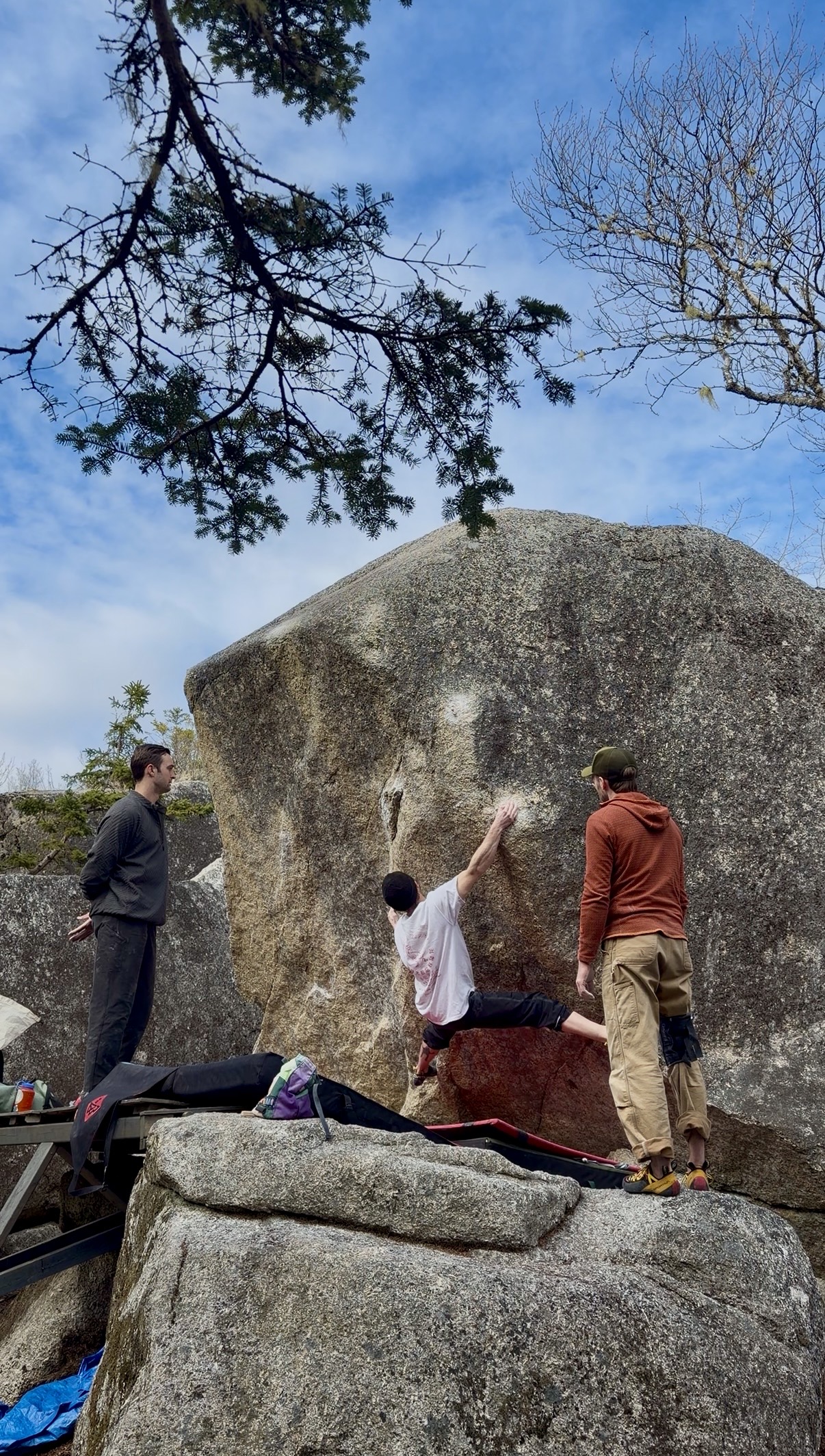
What Grizzly proved that Red Rock had only suggested: the progress from Bishop, from Red Rock, from months of board sessions and grip work, could translate onto technical Nova Scotia granite. In a style that had previously been a weakness. Through conditions that were never perfect and a process that was rarely clean.
Mama Bear Post-Break mattered for a different reason. After sending the hardest boulder of my life, I pulled onto a V8 and sent it first try of the day. It was not the point of the day. But it showed something worth noting: the Grizzly send was not a desperate one-off that used everything I had. There was still enough energy and confidence left to keep climbing. That distinction, between barely scraping through and actually feeling ready, is one of the things the whole season had been working toward.
May: The Month Got Less Neat
May was the most interesting month of the first half because it refused to be tidy.
There were strong days. There were sends. There was also Carbosaurus, which ran through the entire month without resolution and is still running.
Carbosaurus, May 5 / May 14 / May 30: No Send
Lat/Lon: 44.49926, -63.90121
Carbosaurus is a V10 boulder problem at the Corn and Bung Boulders in the Land of Confusion, in the Peggy’s Cove Wilderness Area. It is the left exit of Resurrection, which is one of the best boulders in Nova Scotia.
The movement is sustained and physical throughout: a left-hand toss to a juggy knob, a lock-off and pull through to the arete, a claw grip with a thumb catch, a backflag, a sidepull crimp, a big left-hand move to the best sloper on the lip. Then, rather than following the arete right per Resurrection, you commit to traversing slopers left, building toward the crux: a huge left-hand toss to a slopey block. Once you stick it, you bump left again to create room for a high right foot, cross right to a good pinch, and proceed to the top via The Whale’s Back.
I have done every move. I have not yet linked the boulder from the ground.
The crux throw is extremely position-dependent. Getting your right hand and right foot precise enough to generate for the throw is what turns it from impossible to repeatable. Over three sessions, I have refined the earlier beta enough to arrive at the crux fresher each time. And each time, the catch hold still feels just out of reach: not because I am not strong enough in isolation, but because I have not yet solved the body position problem completely enough to transfer that strength cleanly into the throw.
Carbosaurus is the honest thread running through May. Three sessions, no send, and something being exposed each time: a positioning problem that requires constant adjustment, a technical demand that does not respond to willingness alone. That is a specific kind of useful. It is the kind of problem that is not going to fall until the underlying issue is actually solved, not just worked around.
I am already looking forward to fall conditions on it. The bug season will eventually end. The temperatures will drop. And the problem will still be there, waiting to see whether the positioning issue has been resolved.
May 16: Flyboy, Second Ascent
Lat/Lon: 44.81111, -63.20213
The first ascent of Flyboy was Adam Benjamin’s in July 2025. For almost a year, it did not see a second ascent, despite local rope climbers trying it. That was part of what made it interesting.
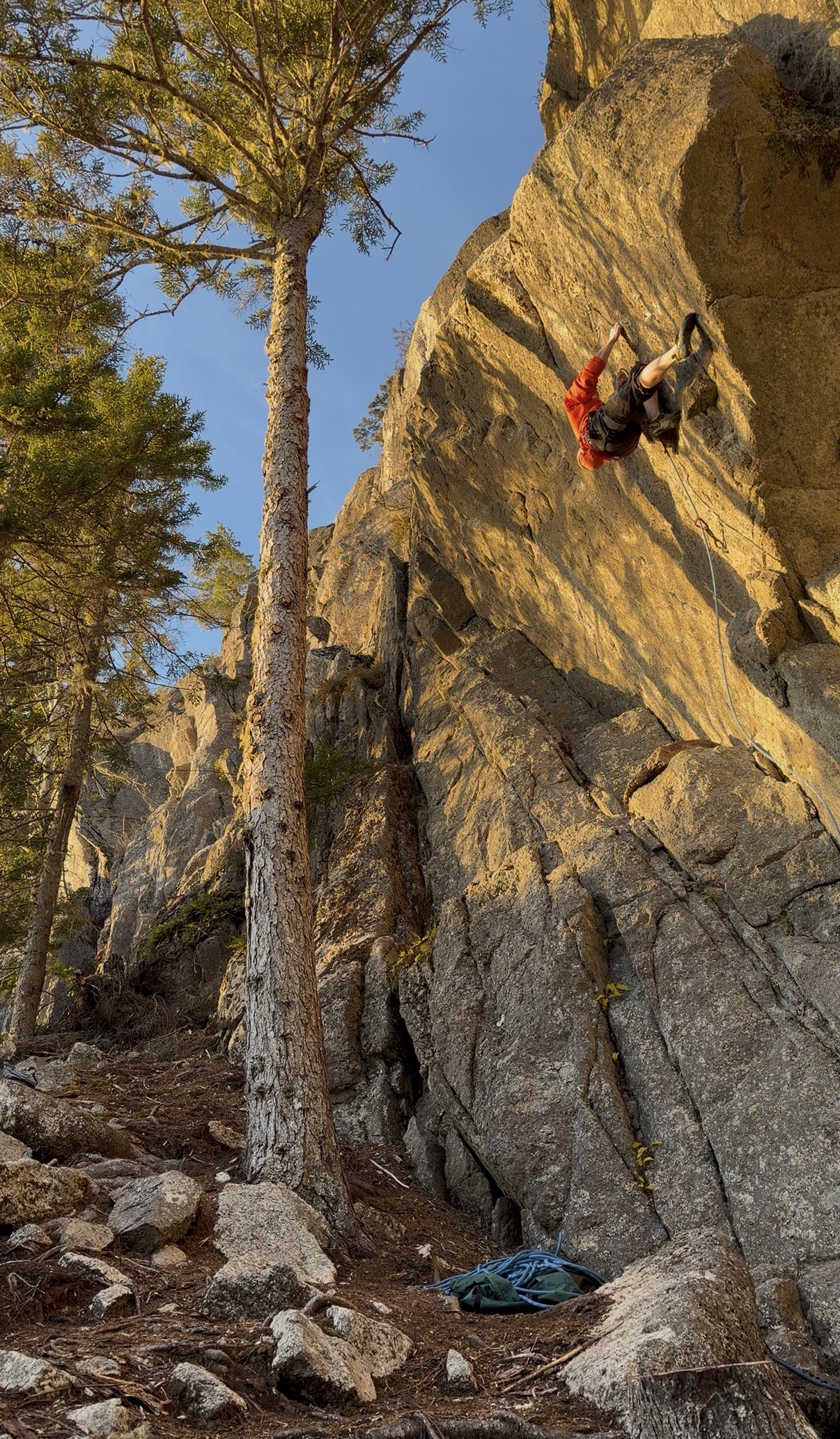
Flyboy is a 5.12c sport route at the Deep South area of Main Face in the Musquodoboit climbing region. It opens with a short, steep boulder problem on nice incut crimps, then asks you to hold the pump together as you traverse a lip of slopers. It is unique from most hard Nova Scotia sport climbing, which tends toward vertical or slab terrain: styles I respect but do not find especially inspiring to project. The steepness of Flyboy, its brevity, and its physical demand made it spark more joy than other hard local routes.
Route climbing is typically not a large part of my season. My instinct is to go back to hard bouldering whenever conditions improve. But there is real value in the detour. A route demands a different kind of readiness: the ability to hold things together past the crux, to manage pump, to stay functional when you are not fresh. Those are capacities that bouldering does not always test.
The moment Flyboy came together, there were no thoughts. Approaching the section where I had pumped out the session before, I stopped trying to perfect every placement and just kept moving. Left hand on the first good sloper after the crux. I knew from that point I was going to do it. Not hope, just knowledge. The flow state had arrived and I was already under the anchor before I had time to analyze it.
The second ascent detail matters because it places the climb in a local context rather than a personal one. This was not a route where the second ascent had been waiting years for the right conditions. It was waiting for the right overlap of bouldering power, route fitness, and willingness to try hard on a rope. I was glad to be that person.
May 18: Optimus Prime Flash and I Heel Pebbles
Lat/Lon: 44.48252, -63.87133
The first Dover Island trip of the season was May 18, with Tyler, Evan, Gillian, and Nick. Dover is the heart of Nova Scotian bouldering.
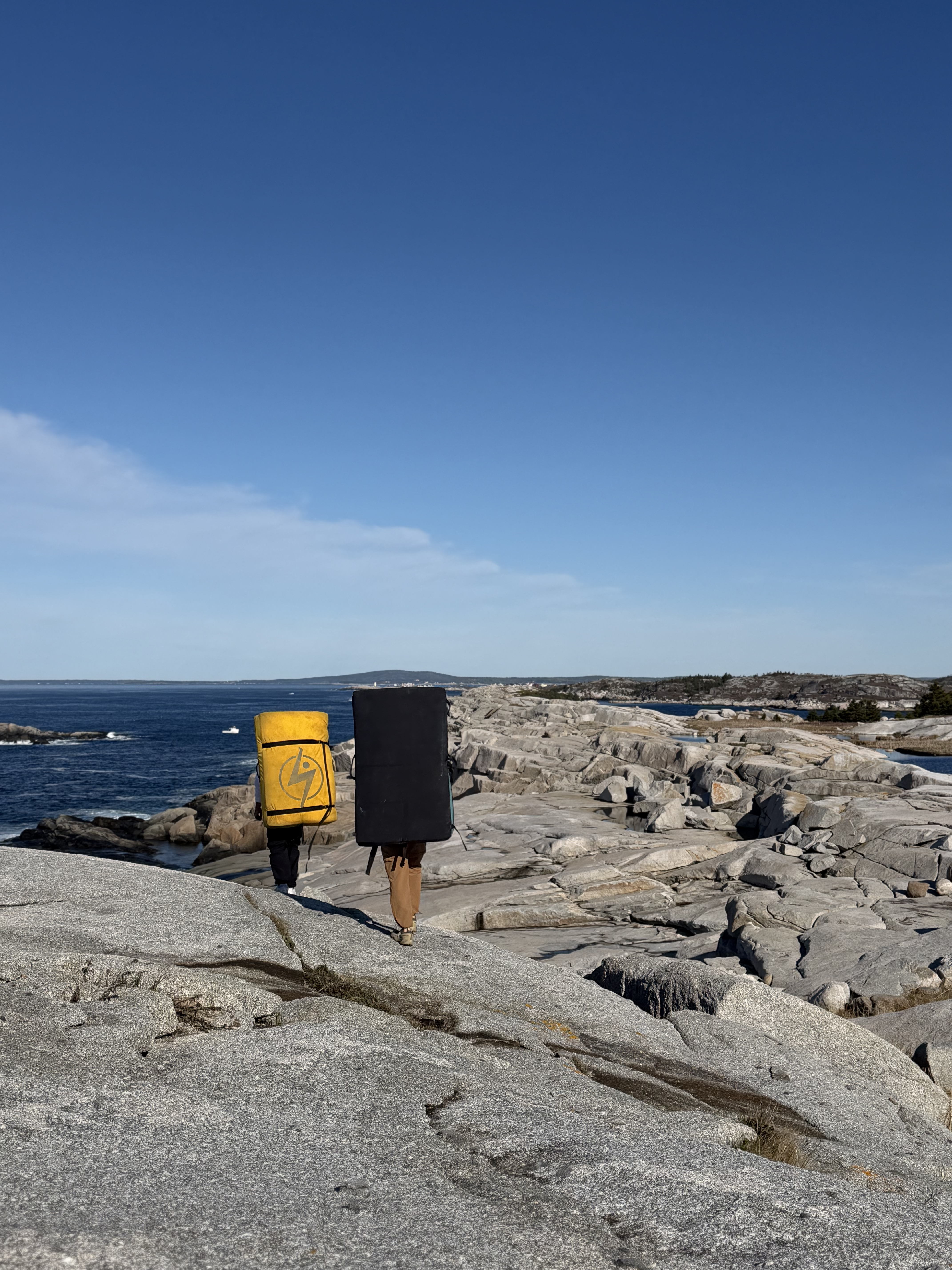
Optimus Prime is a V6 in Sector 1, The Corners, right beside a pool of green water that gives the area a particular ambience. It follows the left arete of a blocky feature, moving right onto slopers. The flash felt controlled. I pulled on, felt strong on the holds, floated the crux, and found myself at the top before I had fully processed what happened. That is the best kind of flash: not a scramble where you barely scrape through, but a read that translated cleanly into execution. It set the tone for the day.
I Heel Pebbles is a V10 in Sector 3, The Roofs. The first ascent was Paul Denzler’s in 2016. It is a sustained problem that breaks into two parts: a roof compression opening that transitions into the classic I Heel Good finish. The most complex move is a left-hand throw off a ridiculously high foot to a hold just above the fin feature. After figuring out the sequence relatively quickly, the work became about execution: arriving at that left-hand throw efficiently enough to actually convert it.
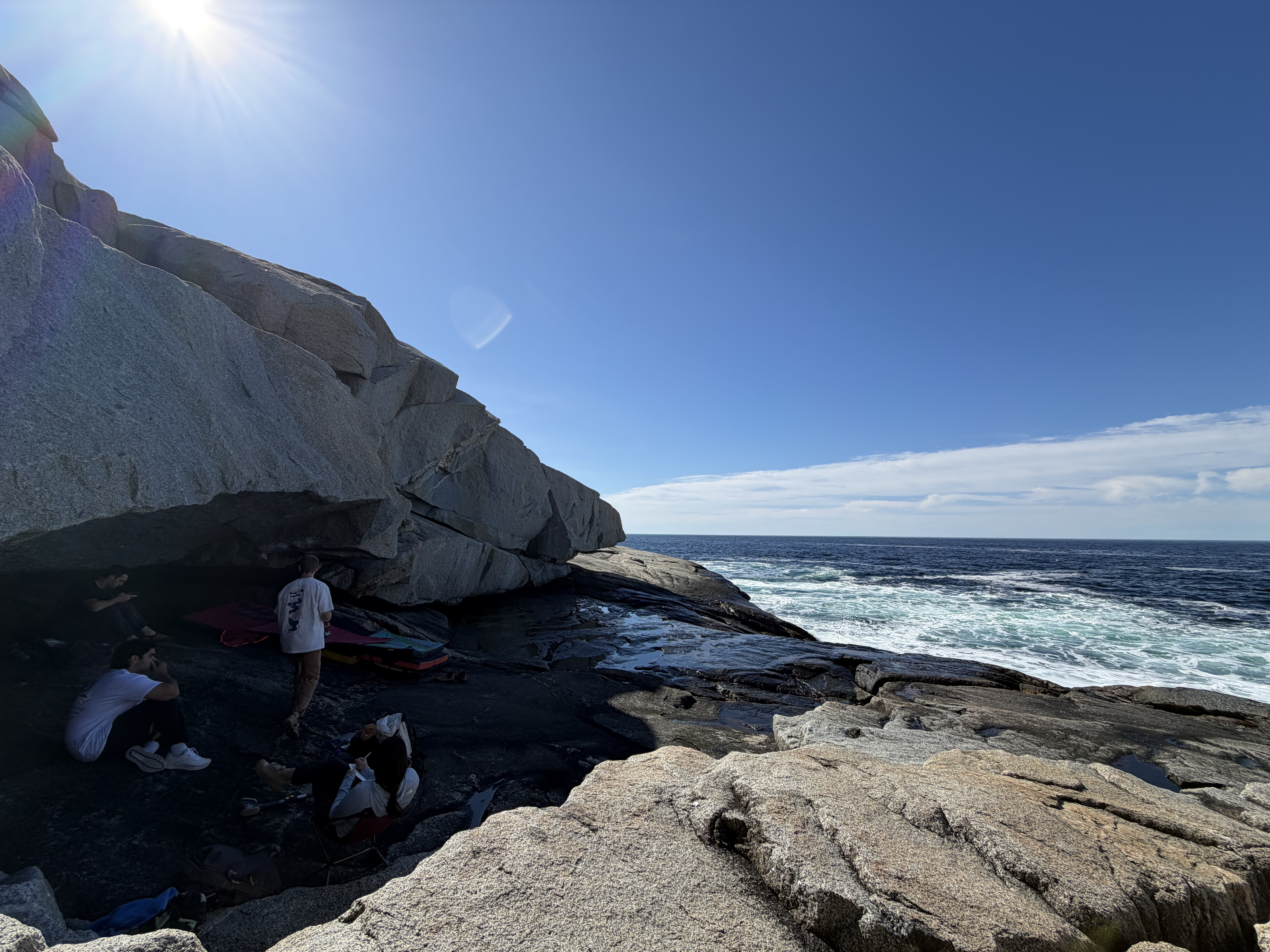
Tyler’s early description of my heel tension as having the precision of a toddler was accurate and useful. The first few attempts made clear that the footwork on the earlier section was leaking too much energy before I ever reached the hard move. Refinement is not always dramatic. Sometimes it is just cleaning up waste in the setup so the crux has something to draw on. After a couple of hours, I was standing on top of the testpiece.
What made this day feel like one of the strongest single-day moments of the season was not just the results. It was the quality of execution. The flash of Optimus Prime, the single-session completion of a hard local testpiece, the first time on Dover this year: it felt like carrying the Red Rock version of myself onto home rock and having the translation actually hold. The confidence that showed up in Nevada was still present in Nova Scotia. That had not always been guaranteed.
June 8: Tsunami
Lat/Lon: 44.50761, -63.52189
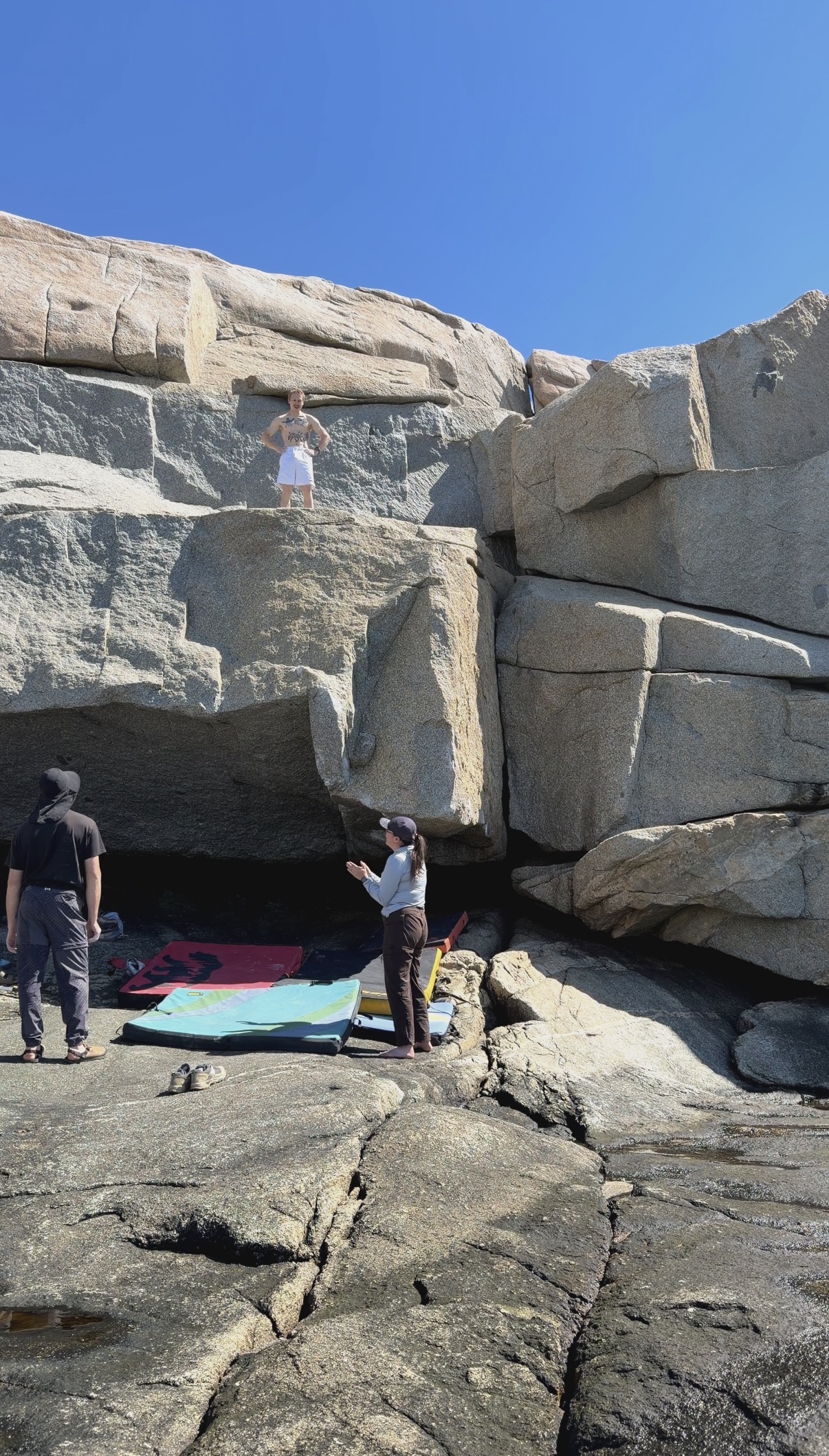
Tsunami is a V8/9 at Chebucto Head. It was first ascended by Sean Cassidy in 1999: a line old enough that Nick Sagar reportedly used it for laps while training for Yosemite Valley projects. That history is part of the texture of the climb.
The boulder splits into two sections. The first is technical face climbing to a good kneebar rest. The second is the crux: burly underclings, physical movement, and a foot ledge that leads to the top-out. I first visited it in 2024, figured out my beta, and high-pointed on the final undercling sequence before running out of skin and endurance. Two years later, the project was still waiting.
I came back in June partly to escape the mosquito and black fly dominance that takes over the Nova Scotia interior in late spring and early summer. The first session this year, I reached the final foot move three times in a row before the light ran out. The second session, with more time and a dropknee that made the final moves more reliable, ended with a send on the third try.
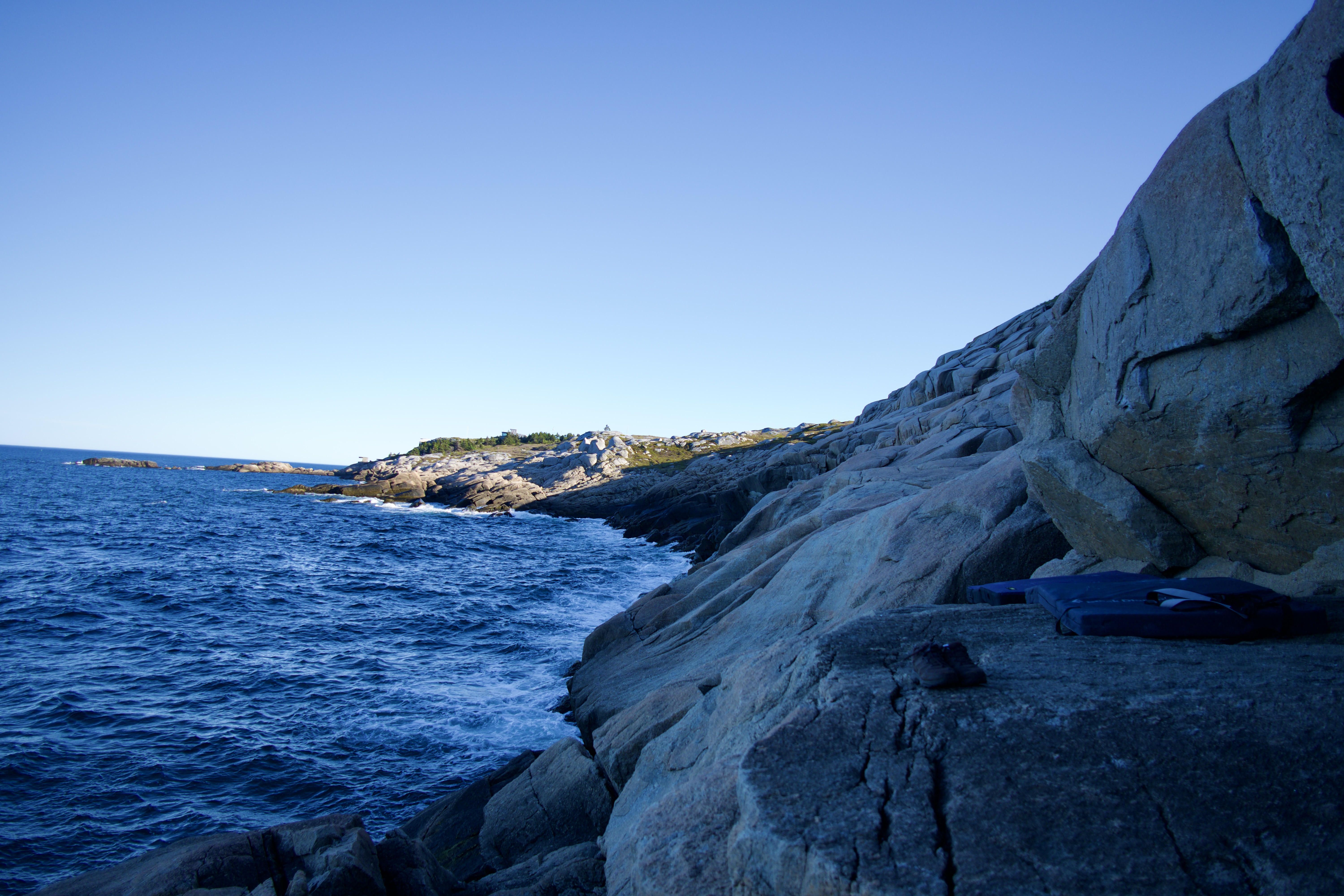
Tsunami is not my favourite boulder. Not the best movement, not the most beautiful line, not the hardest thing I climbed this year. I am not sure it matters.
What the send revealed, more than anything, was something about how I relate to the climbing I have access to. There was a version of this project that felt like a thing to tick off the list because it was there, because it was local, because it was a known boulder that I had started. But the send did not feel like housekeeping. Bouldering outside with friends, by the ocean, on a warm day: none of that required the boulder to be the greatest thing I had ever touched. There is a version of this sport where you only care deeply about the biggest send. And then there is a version where you are grateful for the problem in front of you, regardless of where it sits in your grade history.
I found more of the second version on June 8 than I expected.
What the First Half Gave Me
The first half of the year gave me more than a list of climbs.
Red Rock reset the belief. Grizzly confirmed it could survive local granite. The Dover day showed that execution and confidence built on foreign rock could translate to home. Flyboy proved there was range outside the usual identity. Carbosaurus reminded me that not everything folds under pressure, and that some problems wait for the limitation to be genuinely resolved rather than just endured.
The clearest takeaway is not a grade. It is that the gap identified in the About page of this site, board strength that does not always translate to outdoor climbing, has been getting smaller. Not closed. Smaller.
The first half gave proof that the translation is happening. It did not give final answers about how far it goes. Carbosaurus is still waiting. Fall will bring back the good conditions spring could once offered. Finding out how far it goes is what the next six months are for.